
Best Oil-Filled Radiators for Quiet, All-Day Heating
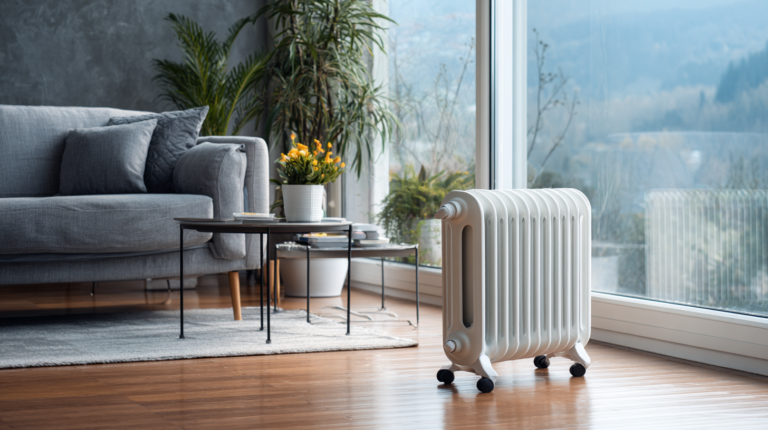
Oil-filled radiators are comfort-first portable heaters. They’re not built for instant blast heat — they’re designed for quiet, steady warmth that becomes more comfortable the longer you stay in the room. That makes them a strong fit for bedrooms, home offices, and all-day background heating in one occupied space.
This guide breaks down where oil-filled radiators truly shine, what to prioritise for each use-case, and the setup habits that make the biggest difference to comfort and running cost.
By the end of this guide, you’ll know:
- which oil radiator setup fits bedrooms, offices, and continuous use;
- what features matter most for quiet “set-and-forget” comfort;
- how to place and run an oil radiator for better real-world warmth;
- the common mistakes that make oil radiators feel slow or underpowered.
Quick Picks (10-Second Recommendations)
If you want the DecisionEdit shortcut, start here:
✅ Best for bedrooms: quiet operation + timer/scheduling + stable thermostat.
✅ Best for home offices: steady background heat + easy controls + smart placement.
✅ Best for continuous use: reliable cycling + safety cut-offs + enough output to maintain (not chase).
Core reality check: oil radiators work best when you heat for hours, not minutes.
What to Look For (Selection Framework)
This guide focuses on choosing the right type and feature set for your situation — not naming specific models. For quiet, all-day heating, “best” usually means:
- Stable thermostat behaviour (less temperature swinging).
- Timer/scheduling (removes waiting and reduces waste).
- Safety cut-offs (overheat + tip-over protection).
- Enough output to maintain comfort (especially in higher heat-loss rooms).
- Practical usability (wheels, weight, control simplicity).
If those priorities match your room and routine, an oil-filled radiator is often one of the easiest heaters to live with day-to-day.
Why Oil-Filled Radiators Work So Well for All-Day Heating
Oil-filled radiators behave differently from fast-response heaters. Instead of heating air aggressively, they warm their internal oil and metal body, then release heat steadily over time. That creates two clear advantages for long sessions:
The comfort feels stable
Once the radiator body is warm, the room tends to feel calmer and less “spiky.” You’re less likely to feel a constant blast / cool / blast pattern.
The heater feels quieter and less intrusive
No fan. No directional airflow. No persistent motor noise. In bedrooms and offices, this matters more than most people expect.
DecisionEdit takeaway: for long sessions, comfort isn’t just temperature — it’s how the heat feels while you live in the room.
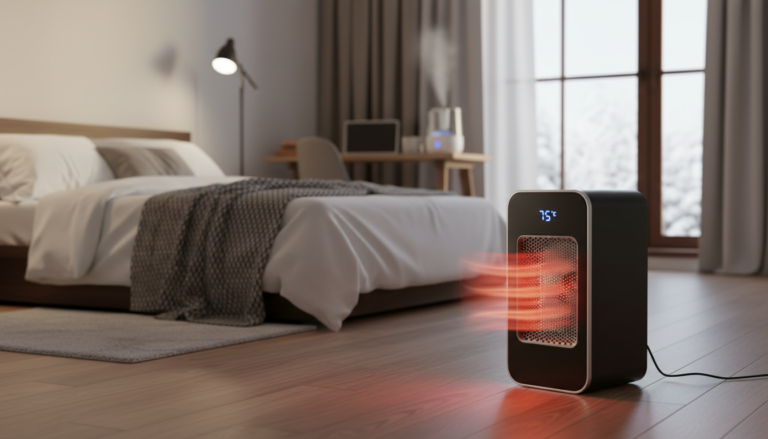
Best Oil-Filled Radiators for Bedrooms
Bedrooms have two special rules:
- Noise matters.
- Comfort stability matters more than speed.
That’s why oil radiators are a strong match for bedroom heating. They’re quiet and steady — which is exactly what you want when you’re sleeping or winding down.
The ideal bedroom oil radiator has:
✅ Very low noise (no fan, no airflow)
✅ A usable thermostat (so it doesn’t overheat the room at 2 AM)
✅ Timer or scheduling (so you don’t run it longer than needed)
✅ Stable base (bedrooms are tight spaces; stability matters)
✅ Overheat + tip-over protection (baseline safety)
Bedroom setup tips that improve comfort fast
1) Heat the occupied zone, not the whole home.
Bedrooms usually don’t need “whole-house warmth.” You want a comfortable room where you can sleep.
2) Start earlier than you think.
Oil radiators don’t warm instantly. If you want comfort at bedtime, turning it on right as you get into bed is too late. Timers solve this.
3) Keep it clear of fabrics.
Bedrooms are full of soft surfaces. Maintain safe clearance around the heater at all times.
When an oil radiator is NOT the best bedroom choice
If you regularly want quick heat for 10 minutes and then off, an oil radiator can feel too slow. In that scenario, either accept a slower warm-up as the trade-off for silence and steady comfort, or choose a faster-response heater type and manage the noise.
DecisionEdit bedroom rule:
If the heater interrupts sleep, it’s the wrong heater — even if it’s powerful.
Bedroom Mini Checklist
Before you commit, ask:
- Will I run this for hours?
- Do I need total silence?
- Do I want it to turn off automatically?
- Can I place it safely with clearance?
If yes to most: an oil radiator is a strong match.
Best Oil-Filled Radiators for Home Offices
Home offices are comfort traps. You sit still for long periods, which makes you feel colder — and you need focus, which makes fan noise and airflow more irritating than usual.
Oil radiators work well here because they deliver warmth in the background, and once stable, they stop stealing your attention.
The ideal home-office oil radiator has these attributes
✅ Stable background output (enough to maintain comfort)
✅ Simple, readable controls (you don’t want to fight the dial)
✅ Multiple power settings (ramp up, then settle down)
✅ Wheels + portability (offices change layout more than people expect)
✅ A thermostat that doesn’t swing wildly
The #1 office mistake: placing it too far away
Zone heating is your friend. Place the radiator:
- near the desk area
- not blocked by furniture
- with open space around it for convection airflow
If it’s across the room, it may be working — but you won’t feel it where you sit, and you’ll end up turning it up unnecessarily.
Office comfort strategy that saves money
Treat the radiator like a steady baseline:
- start with higher output for warm-up
- let the room stabilise
- then let the thermostat maintain comfort
DecisionEdit office rule:
The best office heater is the one you forget exists.
Home Office Mini Checklist
- Am I in this room for 2+ hours at a time?
- Do I hate noise and drafts?
- Do I want stable warmth without babysitting it?
If yes: an oil radiator is one of the strongest options.
Best Oil-Filled Radiators for Continuous Use Scenarios
“Continuous use” doesn’t have to mean 24/7. In real life, it usually means:
- all-day heating while you’re home;
- long evening sessions;
- heating a room for most of your waking hours;
- “I’m in this space all day” comfort.
Oil radiators make sense here because they’re designed for long-session stability — but continuous use changes what you should prioritise.
The ideal continuous-use oil radiator has these attributes
✅ Enough output to maintain room temperature
✅ Reliable cycling behaviour (stable comfort over time)
✅ Overheat protection (non-negotiable)
✅ Tip-over protection (especially in busy rooms)
✅ Timer features (to avoid heating when you don’t need to)
What continuous use really demands: room reality
If you’re heating all day and the room is drafty, you’re effectively filling a bucket with a hole. So for continuous use, your biggest upgrade often includes:
- closing doors consistently;
- thicker curtains in the evening;
- draft sealing where possible;
- zone heating where you sit.
Even small changes reduce how hard the radiator has to work.
Continuous Use: Warm-Up vs Maintenance (How to Run It Smart)
A simple pattern that feels comfortable without “full blast all day”:
Phase 1: Warm-up
Turn it on while you start your routine.
Phase 2: Stabilise
Once the room feels comfortable, reduce output (or let the thermostat cycle naturally).
Phase 3: Maintain
The goal isn’t maximum heat. It’s holding comfort without constant spikes.
This is where oil radiators shine — once warm, the room often feels steadier and calmer.
Running Cost Reality Check (Without the Myths)
Oil-filled radiators don’t create extra heat, and they don’t run on “free oil.” They’re electric heaters. Running cost depends mainly on:
- heater power (kW)
- how long it runs
- your electricity tariff
- how much heat the room loses
What oil radiators can do well (in the right setup) is reduce comfort frustration — fewer harsh spikes, less fiddling, and a steadier room feel. That changes how people use them in real life.
DecisionEdit truth:
The cheapest heating is the heating you don’t waste.
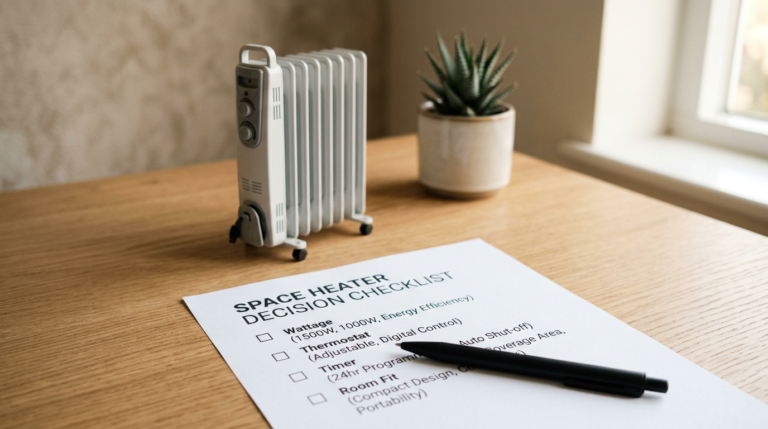
What to Look For (DecisionEdit Feature Checklist)
If you’re choosing an oil radiator for quiet, long-session heating, these features matter most:
Must-Haves
✅ Overheat protection
✅ Tip-over protection
✅ Stable base
✅ Usable thermostat control
✅ Enough output for the room
Quality-of-Life Features
✅ Timer / scheduling
✅ Multiple power levels
✅ Quiet, predictable control behaviour
✅ Wheels + mobility
✅ Cord management
Nice-to-Haves
✅ Digital readout (if you like precision)
✅ Remote control (if you’ll actually use it)
✅ Eco modes (only if behaviour is predictable)
Quick Setup Table: Get the Best Comfort from an Oil Radiator
| Use Case | Best Setup Strategy | Placement Rule | Runtime Pattern |
| Bedroom (sleep / wind-down) | Pre-warm the room, then maintain | Clear space around the heater, away from bedding/curtains | Warm-up → lower setting → maintain |
| Home office (focus/desk work) | Heat your zone, not the whole home | Place near the desk area, not across the room | Warm-up → stabilise → maintain |
| All-day continuous use | Aim for stable background warmth | Contain the room (doors/curtains), avoid heat leaks | Warm-up → maintain → shut off when unused |
| Drafty room workaround | Combine heating + containment | Put the heater near the occupied zone, and reduce drafts | Warm-up longer → maintain steady |
| Short sessions (10–20 min) | Oil isn’t ideal—use smart timing | If using oil, start earlier than needed | Pre-warm before entry |
Common Mistakes (That Make Oil Radiators Feel “Bad”)
Oil radiators get blamed for mismatch problems.
Mistake 1: Expecting instant heat
They’re slow by design.
Mistake 2: Using it in short bursts
You never reach stable comfort.
Mistake 3: Heating a leaky room and blaming the heater
The room is the bottleneck.
Mistake 4: Blocking convection airflow
These heaters need space around them.
Mistake 5: Overheating instead of stabilising
If the room swings between too warm and too cool, adjust the strategy and let the heater maintain.
Bottom Line: Oil Radiators Are Comfort Tools, Not Speed Tools
Oil-filled radiators are one of the best portable heaters for quiet, all-day comfort — especially in bedrooms and home offices — because they offer the steady, low-drama heating experience many people actually want.
They don’t win on speed.
They win on stability, silence, and long-session comfort.
If your goal is calm, consistent warmth you can live with all day, an oil-filled radiator is often a strong choice.
If you’re still deciding between heater types:
- Oil-Filled Radiators vs Fan & Ceramic Heaters: Comfort, Cost, and Efficiency — trade-offs by scenario.
If you want the buying framework (wattage + features):
- How to Choose an Oil-Filled Radiator: Wattage, Features, and Room Fit — simple selection logic.
If you want the deeper “how it works” explainer:
- Oil-Filled Radiators Explained: How They Work and When They Make Sense — thermal inertia + myths.