Oil-Filled Radiators Explained: How They Work and When They Make Sense
This guide breaks down how oil-filled radiators work, why they feel “gentler,” what thermal inertia means in plain English, and the energy myths that cause people to buy the wrong heater for the wrong room.
By the end, you’ll know:
- what an oil-filled radiator actually is (and what it isn’t);
- why warm-up speed and heat retention are a trade-off;
- how to think about running costs without falling for myths;
- what safety characteristics matter in real homes.
What an Oil-Filled Radiator Actually Is
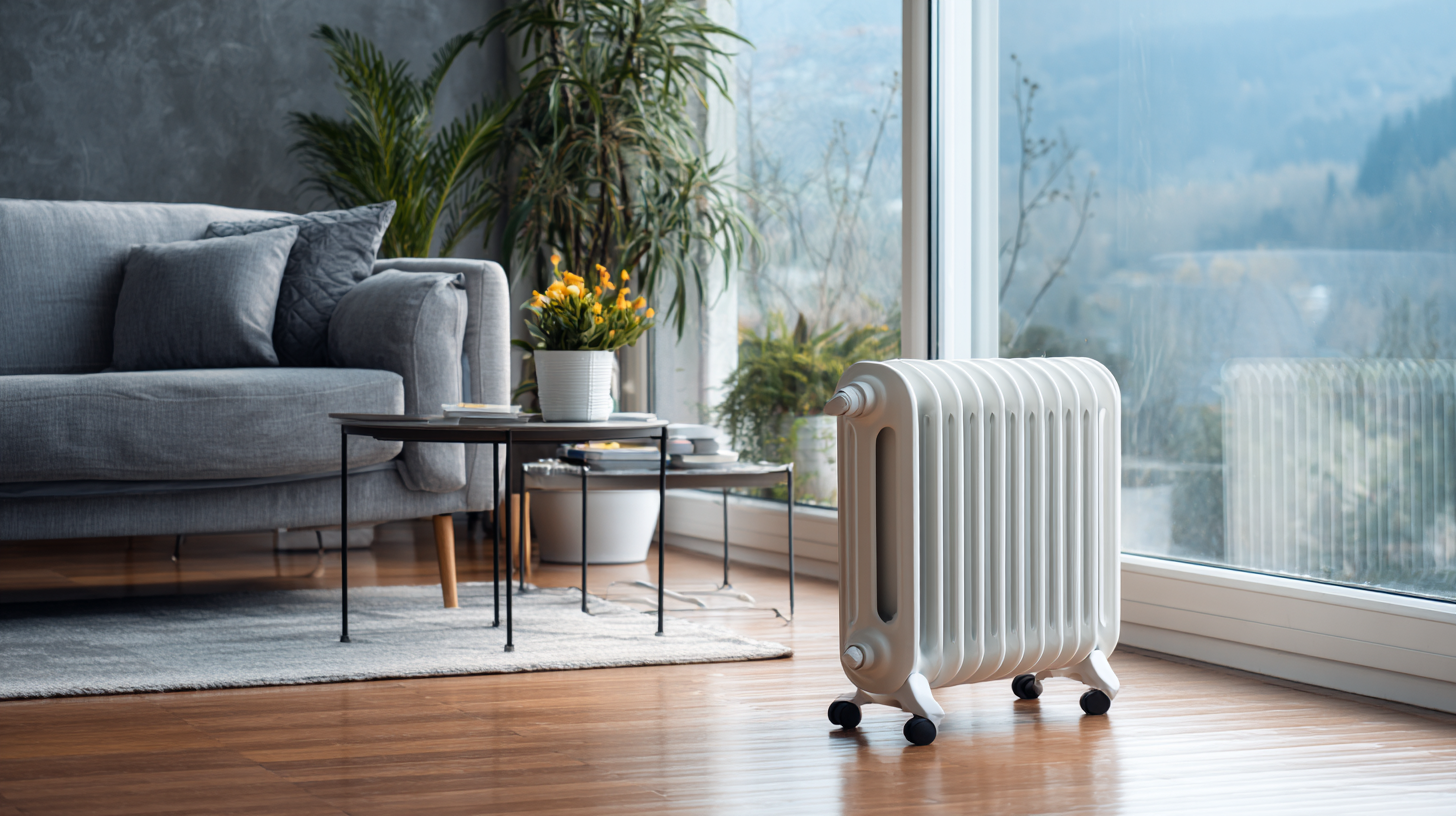
An oil-filled radiator is an electric resistance heater that uses a sealed internal reservoir of thermal oil to store and distribute heat. The oil isn’t fuel. It doesn’t burn. It doesn’t get “used up.” It simply absorbs heat from an internal heating element and helps the unit release warmth steadily over time.
This design is why oil radiators behave differently from fan heaters or compact ceramic heaters. Instead of producing heat quickly and pushing it out aggressively, they build temperature gradually and then maintain comfort in a calmer, more stable way.
Think of it less like a hairdryer and more like a warm brick.
How Oil-Filled Radiators Work (Step-by-Step)
Most oil-filled radiators follow the same basic loop:
- Electricity powers an internal heating element.
- The element warms the sealed thermal oil inside the radiator.
- Heat spreads through the radiator’s metal body and fins.
- The fins release warmth into the room as the unit stabilises.
- A thermostat cycles power on/off to maintain the set temperature.
The “heat reservoir” effect is the key point: oil helps the heater store warmth and spread it through the body, so output feels steadier once it’s up to temperature.
Thermal Inertia, Explained Simply
Thermal inertia sounds technical, but the idea is simple:
Thermal inertia = how slowly something changes temperature.
A lightweight heater has low thermal inertia. It heats up quickly and cools down quickly.
An oil radiator has high thermal inertia because it contains both oil and a heavy metal body. That means it takes longer to warm up — but once it’s hot, it resists cooling and continues releasing heat smoothly even as the thermostat cycles power.
This is the core personality of an oil radiator: slow to build comfort, steady once it gets there.
Why Oil Radiators Feel “Gentler” Than Fan Heaters
People often describe oil-filled radiators as “gentle” or “soft.” That isn’t marketing — it’s about heat delivery and comfort perception.
Why they feel calmer
1) No fan = no gusts of hot air
Fan heaters push heat into the room fast, which creates noticeable airflow, noise, and hot spots. Oil radiators rely on natural convection, so the warmth feels less harsh.
2) Fewer sharp temperature swings
Because the radiator body stores heat, the room can feel more stable once warmed. You’re less likely to feel that quick “on/off” shock.
3) Quiet background heat
In bedrooms and offices, the lack of fan noise is a genuine quality-of-life upgrade.
Decision Anchor #1
If you want fast heat, you can feel it immediately; an oil-filled radiator will feel too slow.
But if you want steady warmth that stays comfortable once it’s there, this is exactly what they’re made for.
Warm-Up vs Heat Retention: The Main Trade-Off
This is the trade-off you’re always making with oil radiators:
Warm-up speed (the weakness)
Oil-filled radiators take time to reach operating temperature. Even at higher wattage, they’re still warming a large mass of oil and metal.
Heat retention (the strength)
Once the unit is warm, it can keep the room comfortable with gentler power cycling — because it continues releasing stored heat from the radiator body.
That’s why these heaters often make sense when you’ll be in a room for 1–4 hours rather than 10 minutes. The comfort curve improves with time.
How They Heat a Room: Convection First, Radiation Second
Oil-filled radiators warm rooms mainly through natural convection:
- Air around the radiator warms.
- Warm air rises.
- Cooler air moves in to replace it.
- The cycle gradually spreads warmth through the room.
They also give off some radiant warmth from their surface, which is why sitting near one can feel comfortable — but the overall room effect is mainly convection.
Placement matters more than many people expect. Because there’s no fan, oil radiators work best when they’re not blocked by furniture and have space for air to circulate.
Energy Myths: What’s True, What’s Not
Oil radiators come with a few myths that cause bad buying decisions:
Myth: “Oil-filled radiators are cheaper because of the oil.”
Reality: They’re still electric heaters. The oil is just a heat-transfer and heat-storage medium.
Myth: “They keep heating for free after switching off.”
Reality: They continue releasing stored heat — but that energy was paid for earlier while the heater was warming up.
Myth: “They use less electricity than other heaters.”
Reality: A 2000W heater is still a 2000W heater. The difference is comfort delivery and how the heater cycles once the room stabilises.
Decision Anchor #2
If your goal is the lowest running cost, the heater type matters less than your room heat loss.
Drafts, poor insulation, and large spaces will punish any electric heater.
Real-World Efficiency: What Actually Affects Running Cost
Running costs come down to the same fundamentals:
- Wattage (maximum power draw).
- Runtime (how long it runs at high output).
- Room heat loss (drafts, insulation, windows, room volume).
Oil-filled radiators sometimes feel “efficient” because they maintain comfort without constant blasting once the room is warm. But the rules of electricity don’t change — what changes is how comfortable the heat feels and how steadily it can be maintained.
A useful way to think about this is:
Wattage isn’t the bill — runtime is the bill.
Safety Characteristics (and What Makes Them Lower-Risk)
Oil-filled radiators are often considered safer-feeling than some other portable heaters because:
- the heating element is sealed inside;
- there’s no exposed glowing coil;
- there’s no fan pushing hot air directly into fabrics;
- heat delivery is steady rather than spiky.
That said, “safe” still depends on common-sense use:
- keep clear space around the heater;
- avoid placing it near curtains or bedding;
- manage cables carefully;
- avoid extension cords and overloaded sockets.
Oil radiators can still get hot to the touch — but in everyday use, they’re generally lower-drama than many quick-blast alternatives.
Comfort, Noise, and Air Quality: The Hidden Benefits
Oil-filled radiators are popular in quiet spaces because they don’t push airflow around the room. For many people, the comfort improvement isn’t “more heat” — it’s less irritation.
That’s why they’re commonly used for:
- bedrooms;
- nurseries;
- home offices;
- long evening living-room sessions.
They’re also a good fit when you want background warmth without the constant noise of a fan heater.
Where Oil-Filled Radiators Make Sense (Best Use-Cases)
Oil-filled radiators are a strong choice when you want:
- steady warmth over time;
- low noise and zero airflow;
- “set and forget” background comfort;
- heating for hours, not minutes;
- one-room “occupied zone” heating.
They work especially well in rooms where you can close the door and contain the heat.
Decision Anchor #3
If you’re heating a room where you’ll sit still for hours (work, sleep, relax), oil-filled radiators make sense.
If you’re in and out all day, you’ll likely prefer faster heat.
Where They Don’t (and What to Choose Instead)
Oil radiators can feel frustrating when:
- you need instant warmth;
- the room is large and loses heat constantly;
- you want heat projected across the room quickly.
In those cases, a heater designed for fast response may fit better. The key is matching the heater type to the problem:
- short bursts → fast heat delivery;
- long sessions → stable background comfort.
Quick Buyer Checklist: Choosing the Right One Without Overthinking
If you’re buying an oil-filled radiator, focus on practical features:
- appropriate wattage for the room;
- a thermostat that’s easy to control;
- multiple power settings (useful for warm-up vs maintenance);
- wheels/weight (oil radiators can be heavy);
- overheat protection and tip-over protection;
- timer/scheduling if you plan long sessions or overnight use.
Decision Summary: The “If This, Then That” Bottom Line
Oil-filled radiators are comfort-first heaters.
They warm up more slowly than fan or ceramic heaters — but once stable, they deliver a calmer, quieter kind of warmth that works well for long sessions.
If you want instant blast heat, choose a heater type with a faster response.
If you want quiet, steady comfort for hours, an oil-filled radiator is often a sensible choice.