Portable Heaters Explained: Types, Wattage, and How They Actually Heat a Room
This guide explains how portable heaters really work, why wattage alone is misleading, and how to avoid the common mistakes that leave people cold or overpaying.
By the end of this guide, you’ll know:
- which heater type suits your room;
- how to estimate running costs from wattage;
- when to choose spot heating vs whole-room;
- how to avoid the top 5 safety mistakes.
Decision Framing
Before You Choose a Portable Heater
Most people buy portable heaters incorrectly. They focus on wattage, price, or a “best brand” list — and end up cold, annoyed, or spending more on electricity than they expected. The issue usually isn’t that the heater is “bad.” It’s that the decision is made without understanding what portable heaters are designed to do, and what they can’t do.
Portable heaters are power-limited devices. They’re excellent at boosting comfort in one room, for a short period, or in a specific occupied area. They’re far less effective at fixing bigger issues like high heat loss, poor insulation, or large open spaces with lots of airflow.
This guide resets the decision. Instead of pushing products, it explains how different heater types deliver heat, why watts don’t equal warmth, and how heat moves around a room. Once those fundamentals are clear, choosing a heater becomes much simpler — and the results are more predictable.
What Is a Portable Heater?
A portable heater is a supplemental heating device. Its job is to add warmth where and when it’s needed — often in a single room or near an occupied area — rather than to heat an entire home evenly like central heating.
Most confusion happens because portable heaters get judged like they’re mini radiators or mini-HVAC systems. They aren’t. They’re limited by:
• the maximum electrical power a typical socket can safely supply,
• the size and heat loss of the room, and
• how heat is delivered and distributed.
Some portable heaters primarily warm the air, gradually raising room temperature. Others warm people and surfaces, which can feel comfortable even if the overall air temperature doesn’t rise much.
The goal isn’t to “buy the most powerful heater.” The goal is to match heater type and power to what you actually need: whole-room comfort or occupied-zone comfort.
Decision Anchor: What Problem Are You Solving?
Pause and check:
Are you trying to warm the whole room — or just feel comfortable where you sit?
Portable heaters behave very differently depending on that answer.
Types of Portable Heaters Explained
Portable heaters are often marketed with dozens of features, but most of them fall into a few basic categories. The differences aren’t about “efficiency magic.” They’re about how heat is delivered, how quickly you feel it, and how it spreads through a room.
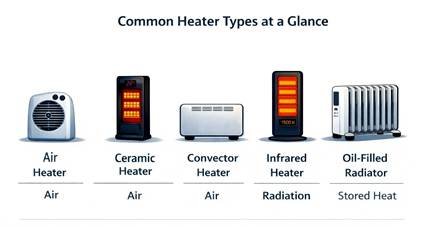
Below are the main types, with their real strengths and limitations.
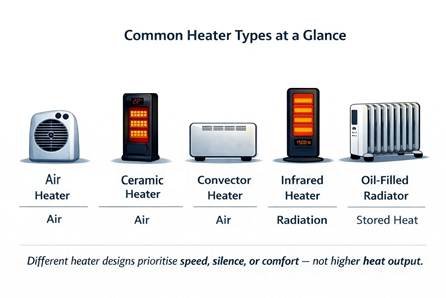
Fan Heaters
How they work:
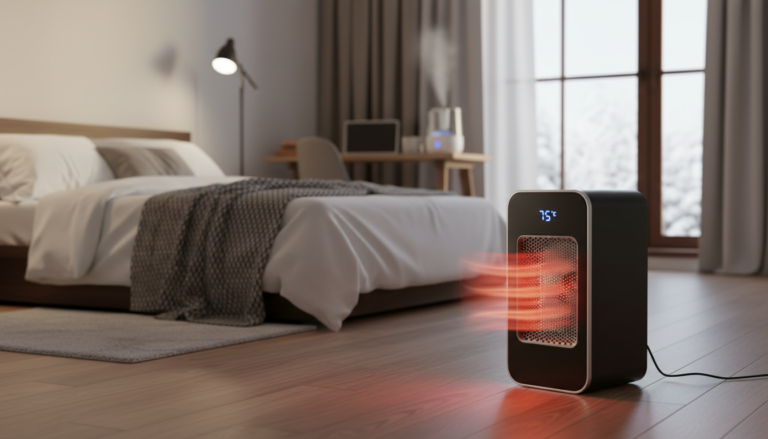
Fan heaters use an electric heating element and a fan to warm a room. They draw in cold air from the back, heat it, and blow it out the front. This quickly raises the room temperature, particularly in smaller spaces.
Many models come with thermostats that automatically shut off the heater once the desired temperature is reached. This feature helps lower energy consumption.
What they’re good at:
• Fast warm-up in a small room
• Short bursts of heat
• Bathrooms only if specifically rated for that environment (many aren’t)
What they’re not good at:
• Quiet environments (fan noise can be intrusive)
• Long, steady heating (they can feel harsh or cycle frequently)
• Large rooms where heat disperses quickly
Running cost reality:
If a fan heater is rated at 2 kW, it uses 2 kWh per hour when running continuously at full power. It won’t always run at full power, but the math is straightforward: power × time.
Best for: quick heat, short sessions
Avoid if: you need silence or long, steady comfort
Ceramic Heaters
How they work:
Ceramic heaters are still electric resistance heaters, but the heating element is often a ceramic component. Many ceramic models include a fan and are designed to deliver smoother, more controlled warm airflow than basic fan heaters.
What they’re good at:
• Quick-to-moderate warm-up
• More “gentle” feel than some basic fan heaters
• Small to medium rooms, depending on insulation
What to be careful about:
Some marketing implies ceramic heaters are inherently “more efficient.” In real usage, the total electricity consumed still depends on wattage and runtime. What ceramic designs can improve is comfort delivery and control, which may reduce unnecessary runtime if used well.
Best for: living areas where you want quicker heat but manageable noise
Avoid if: noise-sensitive bedroom heating is the priority
Convector Heaters
How they work:
Convector heaters warm the air around an internal element. Warm air rises and circulates naturally through the room. Most convectors have no fans, so they’re usually quiet.
What they’re good at:
• Quiet, steady background warmth
• Bedrooms and offices
• Maintaining comfort in smaller rooms
What they’re not good at:
• Very fast warm-up
• Drafty rooms where warm air escapes quickly
• Rooms with high ceilings where warm air collects above occupants
Best for: quiet, consistent heating
Avoid if: you need rapid “blast heat” in minutes
Oil-Filled Radiators
How they work:
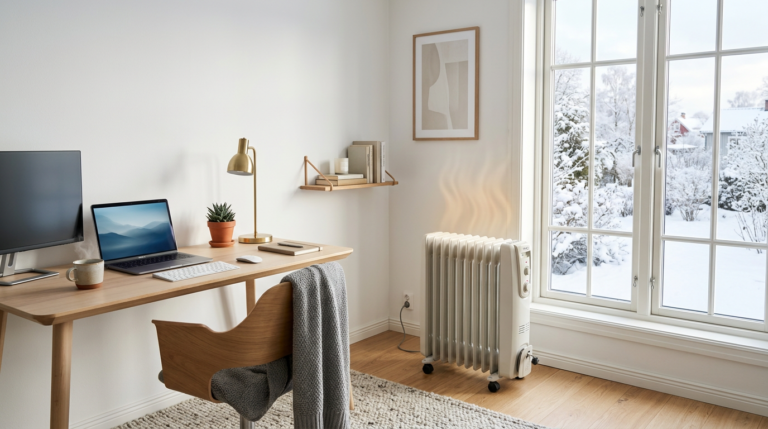
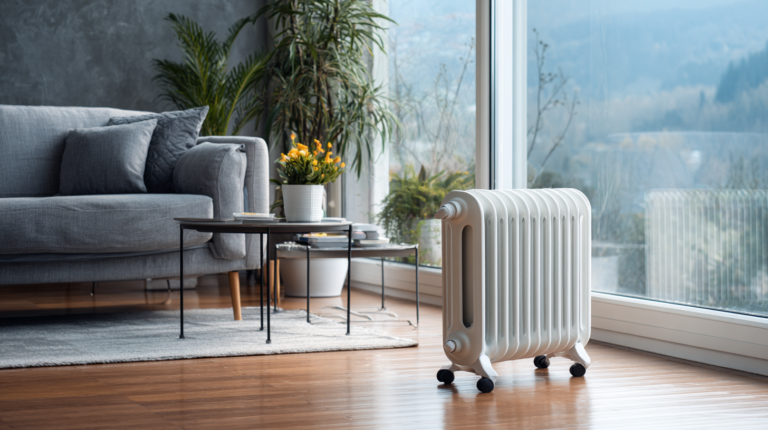
Oil-filled radiators use the metal resistive wire of the heating element to warm internal oil, which then radiates and convects heat into the room. The oil is simply a heat storage medium — it doesn’t burn or get “used up.”
What they’re good at:
• Quiet operation
• Gentle, stable warmth
• Better heat retention after switch-off compared to fan-based heaters
• Bedrooms and longer sessions
What they’re not good at:
• Fast warm-up
• Ultra-light portability (they’re often heavier)
Oil-filled radiators are not “more efficient” in energy conversion terms — but they can feel comfortable because they deliver heat steadily and avoid aggressive cycling.
Best for: bedrooms, quiet rooms, longer heating windows
Avoid if: you need instant heat right now
Infrared (Radiant) Heaters
How they work:
Infrared heaters warm rooms by directing infrared radiation at objects, such as floors, walls, furniture, and people, rather than heating the air. The heat source emits infrared rays, which warm nearby objects.
These objects then radiate thermal energy, gradually heating the surrounding area. This is why they can feel effective in occupied zones even if the room air temperature rises slowly.
What they’re good at:
• Spot heating (desk, sofa, seating area)
• Drafty rooms where air heating struggles
• Situations where you want comfort without heating the entire air volume
What they’re not good at:
• Heating around corners or into other rooms
• Delivering uniform whole-room warmth in large spaces
Safety note:
The practical risk with infrared heaters is not “mysterious radiation.” It’s surface temperature and clearance. Treat them like any heater: keep space around them and avoid placing them near fabrics or furniture.
Best for: targeted warmth where you sit.
Avoid if: you want an even, whole-room air temperature everywhere.
Decision Anchor: You’re Already Narrowing the Options
What should now be clear:
• Some heaters mostly warm air (fan, ceramic, convector, oil-filled)
• Some heaters mostly warm people and surfaces (infrared)
• Any heater can disappoint if it doesn’t match how the room is used
What Wattage Actually Means (and Why It Doesn’t Equal Warmth)
Wattage is one of the most misunderstood specifications on portable heaters.
Wattage indicates the maximum electrical power the heater can draw. It does not guarantee how warm you’ll feel, how evenly a room will heat, or how “efficient” the heater is in real-world comfort terms.
Wattage and running cost (simple and reliable)
Energy used (kWh) = Power (kW) × Time (hours)
Examples:
• 1,000 W heater running for 1 hour = 1 kWh
• 1,500 W heater running for 2 hours = 3 kWh
• 2,000 W heater running for 3 hours = 6 kWh
Why don’t watts always feel warm.
A 2,000 W heater can feel weak if the room is large or has high ceilings, drafts replace warm air with cold air, the heater is placed poorly, or the heat is concentrated in the wrong part of the room.
At the same time, a lower-wattage heater can feel effective if it’s delivering heat directly to occupied areas or if the room holds onto heat well.
Decision Anchor: Stop Chasing Bigger Numbers
Key decision shift:
Wattage tells you how much electricity a heater can use — not how warm it will feel.
Comfort usually improves through better heat delivery and better room conditions, not just higher wattage.
How Portable Heaters Transfer Heat
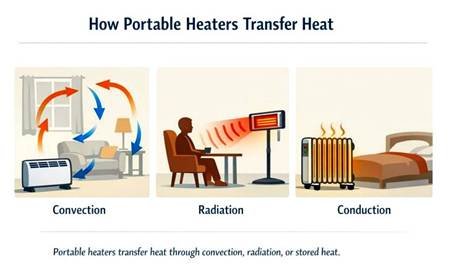
Portable heaters deliver warmth through a mix of three basic mechanisms. Understanding these makes every other decision easier.
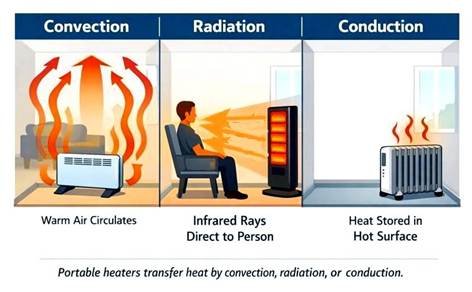
1) Convection (warming the air)
Fan heaters, ceramic heaters, convectors, and oil-filled radiators mainly warm the air, which then circulates the room.
2) Radiation (warming people and surfaces)
Infrared heaters work primarily through radiant heat. Instead of relying on air temperature rising first, the warmth is felt more directly by people and objects in range.
Mean radiant temperature is a real, established part of comfort science: it describes how surrounding surfaces affect your heat exchange with the room.
3) Conduction (contact-based heating)
This is less relevant for air heaters but matters for warm surfaces (for example, touching a warm radiator casing). In portable heaters, it’s usually a secondary effect rather than the main one.
Heat Distribution vs Spot Heating
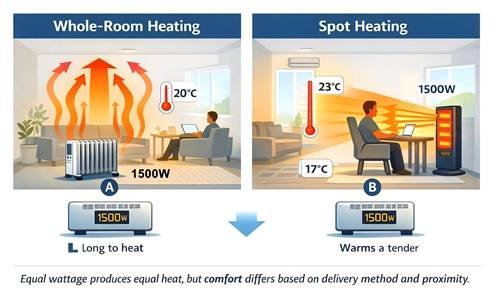
Common mistake: Trying to heat the entire space when only a particular area is in use. This not only wastes energy but also often results in an environment that is less comfortable than the targeted heating.
Portable heaters come in two main types: whole-room heaters and spot heaters.
Whole-room heaters elevate the temperature of an entire space, while spot heaters offer targeted warmth. Any type can warm a room if power and conditions allow — the difference is how fast and how it feels.
A portable heater decision becomes much easier once you choose one of two goals:
Goal A: Whole room heating (distribution)
This means raising the overall air temperature and making the room consistently warm.
Goal B: Spot heating (occupied zone)
This means warming the space where you actually sit: sofa, desk, bedside.
This is one of the biggest “comfort upgrades” people can make without spending more: heating where you live, not where you don’t.
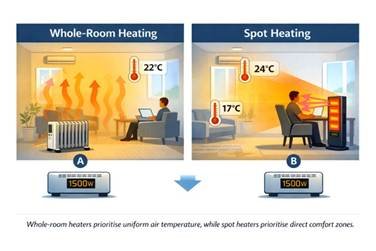
Decision Anchor: Whole Room or Occupied Zone?
This is a fork in the road:
• Whole-room heating aims for even air temperature
• Spot heating aims for comfort where you sit
Most heater disappointments happen because this choice is never made explicitly.
Efficiency Myths (And What Really Affects Running Cost)
There’s a common myth that one plug-in electric heater type is dramatically more energy efficient than another. In reality, most plug-in heaters are electric resistance heating, meaning the electricity they consume becomes heat at the point of use.
Where costs differ is in runtime, heat loss, and how the heat is delivered.
What actually reduces cost:
• Using a heater only where you need it (zoned heat)
• Reducing drafts and heat loss
• Avoiding continuous maximum output
• Choosing a heater type that suits your room and tolerance (noise/comfort)
The “efficient heater” trap:
A heater that feels better can reduce costs because you turn it down sooner or run it less. That’s a real improvement — but it’s not because the heater breaks physics. It’s because comfort delivery is more aligned with use.
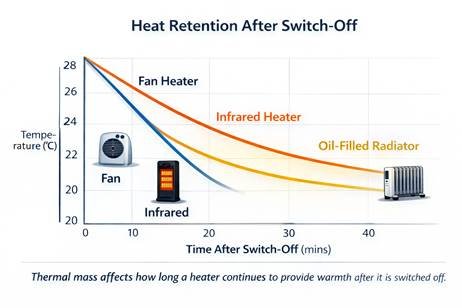
Decision Anchor: Expectations Matter More Than Features
Portable heaters work best when used as supplements, not substitutes for good heat retention.
No feature changes the basic limits of room heat loss.
Safety Basics (What Matters Most)
Safety is not a “bonus feature.” It’s part of using portable heating responsibly. The most important risks are fire from nearby combustibles, overheating from restricted airflow, and unsafe electrical usage.
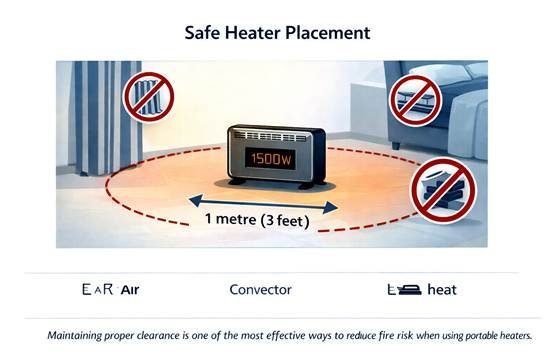
The 3-foot rule (simple and effective)
A widely recommended guideline is to keep anything that can burn at least 3 feet (about 1 metre) away from heating equipment. That includes curtains, bedding, clothes, furniture, and clutter.
Don’t use extension leads or power strips
Many safety bodies warn against running space heaters through extension cords due to overheating and fire risk. Keep heaters plugged directly into a wall socket where possible.
Look for safety features that matter
Prioritise heaters with:
• tip-over shut-off
• overheat protection
• a stable base
• an easy-to-reach power switch
Avoid high-risk placement
Keep heaters off soft furnishings, away from high-traffic walkways, and away from damp/wet areas unless specifically rated.
Always follow manufacturer guidance.
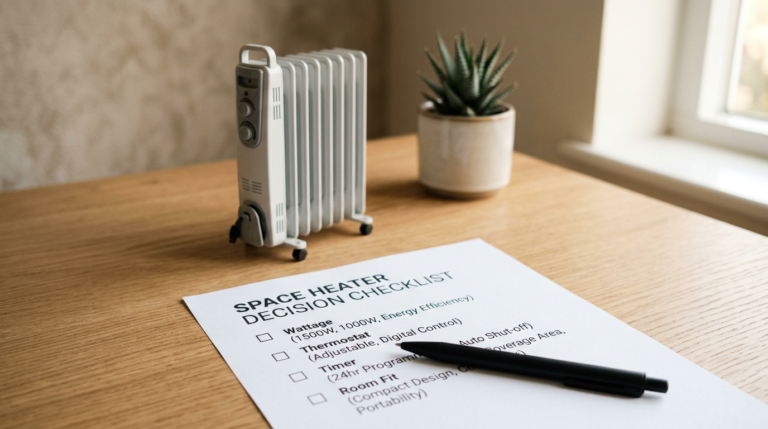
Quick Buyer Checklist
You now possess all the essential information you need. You understand how portable heaters create and distribute warmth. You also grasp why some people find them effective while others do not.
The next step involves practical considerations rather than technical details. Specifically, which heating solution best fits your space and lifestyle?
Step 1: Decide your heating goal
• Whole room (even air warmth)
• Occupied zone (spot heating)
Step 2: Choose the heater type to match that goal
• Quiet steady heat: oil-filled radiator/convector
• Quick warm-up: ceramic/fan heater
• Targeted warmth: infrared heater
Step 3: Match power to your room reality
• Small rooms and good insulation need less power
• Drafts and high ceilings increase the load
• Bigger numbers don’t fix heat loss
Step 4: Control runtime to control cost
• Thermostat and timer help
• Short sessions often outperform constant full power
Step 5: Safety first, always
• Keep clear space around the heater (3-foot rule)
• Plug directly into the wall
• Avoid curtains, bedding, clutter, and damp zones
Final Takeaway
Portable heaters don’t fail because they’re inefficient. They fail because people expect the wrong job from the wrong tool.
Understanding the type of heater (air or radiant), its wattage specifications (including costs and operational limits), and the room’s environmental conditions (such as heat loss rates and distribution patterns) will simplify the decision-making.
Choose the heater that matches how you use the room, set it up safely, and aim for comfort that’s controlled — not “maximum power at all times.”